Free music is useful only when the source is lawful, the download path is clear, and the terms are easy to understand. The internet has never been short on files. It has often been short on discipline.
That is the practical problem this guide is meant to solve. If you want music you can download without stepping into obvious copyright trouble, you need to separate open libraries, artist-authorized giveaways, public-domain archives, and licensing marketplaces that offer limited free tracks. They do not serve the same purpose, and treating them as if they do is how people end up with the wrong file, the wrong license, or the wrong expectations.
Below, I walk through ten reputable options that still make sense for legal free downloads. Some are best for independent music discovery. Some are better for classical recordings or production-use background tracks. A few only offer downloads when the artist chooses to enable them. That condition matters, and I will note it directly.
If you want more context on how this site approaches music access and digital listening habits, review the blog archive or use the contact page if you want a specific resource category covered next.
What Makes a Free Music Download Site Worth Using
My baseline is simple. A site belongs on this list only if it meets at least one legitimate model for distribution: public-domain material, Creative Commons or similar open licensing, artist-authorized free downloads, or a clearly described free tier for selected tracks. From there, the evaluation comes down to four practical checks.
| Check | Why it matters |
|---|---|
| Legality and licensing clarity | You need to know whether the file is free for personal listening only, remixing, commercial use, or no reuse at all. |
| Catalog quality | A large library is not enough if metadata is weak, previews are poor, or the files are difficult to filter. |
| User experience | The safest source is still frustrating if downloads are buried behind broken pages, bait buttons, or misleading prompts. |
| Security and trust | Clean HTTPS delivery, consistent branding, and predictable download behavior reduce the chance of malware or fake mirrors. |
One more distinction keeps readers out of trouble: free to download does not always mean free to use anywhere. Many platforms allow lawful personal downloads while keeping commercial and redistribution rights restricted. Read the license before you assume anything beyond listening.
Top 10 Free Music Download Sites
1. Internet Archive Audio
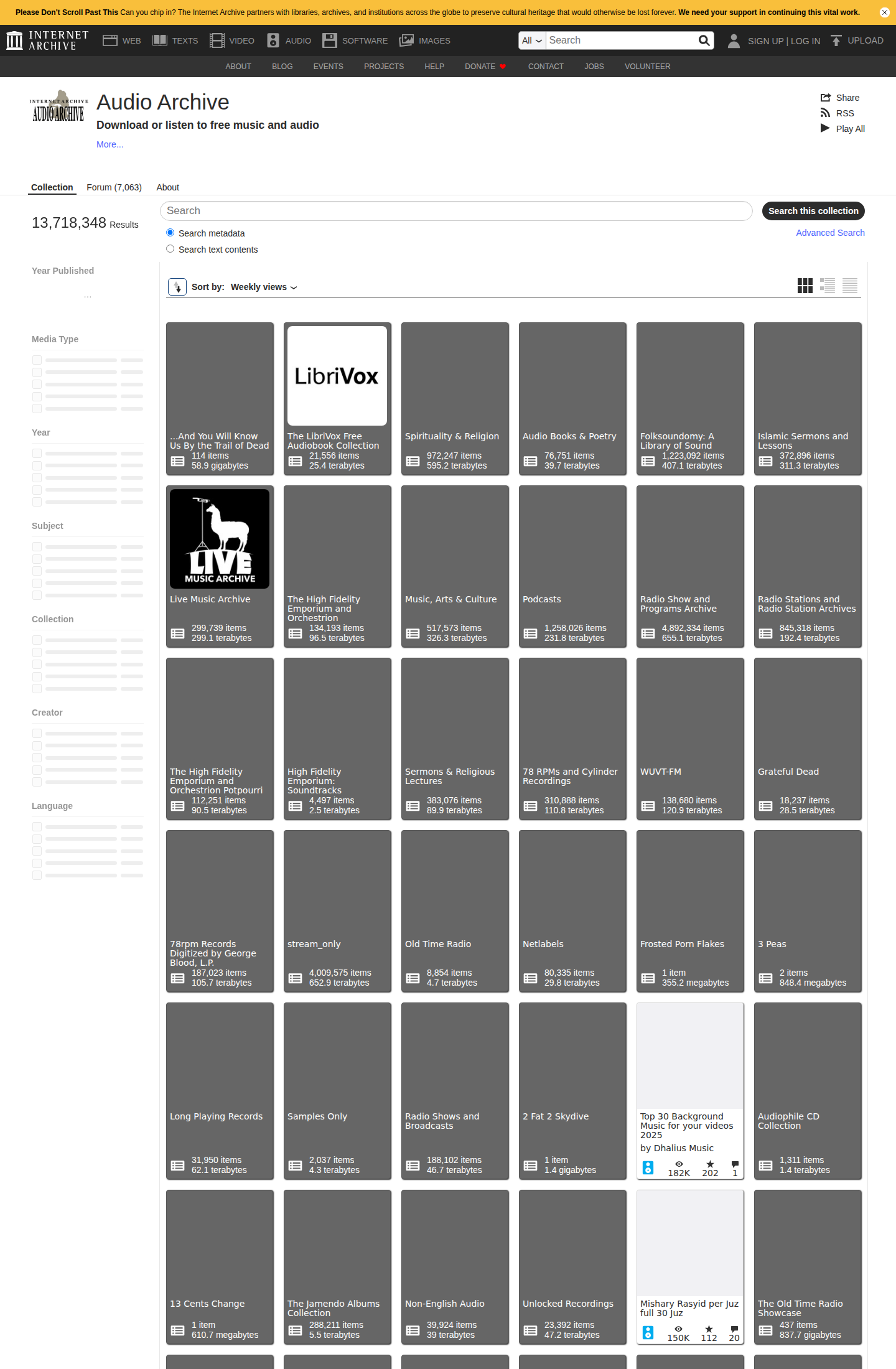
Internet Archive Audio is one of the broadest legal collections on the web. It is especially useful if you want live recordings, historical audio, netlabels, older releases, spoken-word material, or public-domain content in downloadable formats.
Pros:
- Massive catalog across music, live recordings, and archival collections.
- Direct downloads are usually obvious and available in more than one format.
- Strong fit for public-domain, preservation, and niche discovery use cases.
Cons:
- The interface is functional rather than elegant.
- Metadata quality varies by uploader and collection.
- You still need to check rights on individual uploads before reuse.
Best for: archival listening, live sets, historical material, and deep catalog exploration.
2. Free Music Archive
Free Music Archive remains one of the cleaner places to find original music that is explicitly made available for listening and downloading. Its real strength is not sheer scale. It is the ability to filter by license and purpose with less guesswork.
Pros:
- Good license visibility compared with many discovery platforms.
- Useful filters for genre, duration, and public-domain material.
- Strong fit for independent music and creator research.
Cons:
- The catalog is narrower than mainstream commercial services.
- Some readers will find the experience more utilitarian than polished.
- License terms still vary by track, so habit matters.
Best for: indie discovery, background music research, and readers who want licensing context up front.
3. Jamendo Music
Jamendo Music focuses on independent artists and has long been structured around free listening and downloadable tracks. It is useful when you want a large indie catalog without depending on artist-by-artist hunting.
Pros:
- Large independent catalog with genre and mood browsing.
- Downloads are part of the platform model, not an afterthought.
- Reasonable choice for discovering artists outside major-label channels.
Cons:
- Mainstream chart music is not the point here.
- Reuse rights can differ between personal listening and business use.
- The catalog can feel uneven if you only want familiar names.
Best for: independent music fans and creators who want a large open-access listening pool.
4. Bandcamp
Bandcamp is not a blanket free-download library, but many artists offer free or name-your-price releases. That makes it one of the best places to get downloadable music directly from artists who control the release terms themselves.
Pros:
- Strong artist-direct model with clear release pages.
- Excellent for discovering niche scenes and independent labels.
- High-quality files are common when downloads are enabled.
Cons:
- Availability depends entirely on what each artist chooses to offer.
- Free downloads are not universal across the platform.
- Some releases require an email exchange or name-your-price flow.
Best for: readers who want to support independent artists while still finding legitimate free releases.
5. SoundCloud
SoundCloud is primarily a streaming platform, but artists can enable downloads for individual tracks. That means it belongs on the list with one important warning label: do not assume every playable track is downloadable.
Pros:
- Huge discovery engine for emerging artists and unofficial scenes.
- Some creators make original files available directly from the track page.
- Fast way to preview music before committing to a download.
Cons:
- Downloads are selective, not platform-wide.
- Quality and metadata can vary significantly.
- It is easy to confuse streaming access with download permission.
Best for: discovery first, downloads second.
6. Musopen
Musopen is a focused resource rather than a general music marketplace. If your priority is classical music, public-domain recordings, and sheet music, it is one of the safest specialized options available.
Pros:
- Clear niche: classical recordings, scores, and music education resources.
- Strong fit for public-domain and educational listening.
- Much less noise than general-purpose download sites.
Cons:
- Not designed for pop, hip-hop, or mainstream contemporary discovery.
- Some features and limits depend on account level.
- The narrow focus will not suit every reader.
Best for: classical listeners, students, teachers, and public-domain searches.
7. Pixabay Music
Pixabay Music is strongest when you need royalty-free tracks for videos, podcasts, presentations, or simple background use. It is not a listener-first music culture destination, but it is efficient and easy to navigate.
Pros:
- Simple download flow with broad royalty-free utility.
- Useful filters for mood, genre, and production context.
- Good option when you need clean background tracks quickly.
Cons:
- Better for creators than for album-oriented music fans.
- Tracks can feel functional rather than artist-centered.
- You still need to review license terms for edge cases.
Best for: content creators who need safe, quick background music downloads.
8. ccMixter
ccMixter remains a useful source for Creative Commons music, remixes, and community-made tracks. It is particularly good if you care about licensing culture and do not mind a more old-school interface.
Pros:
- Creative Commons DNA is built into the platform identity.
- Good for remix culture, experimental work, and creator projects.
- Licensing expectations are generally easier to trace than on random blogs or mirrors.
Cons:
- The design feels dated.
- The catalog is more specialized than mainstream.
- Readers still need to pay attention to the exact license on each track.
Best for: remix-friendly material, creator projects, and license-aware users.
9. SoundClick
SoundClick still provides free MP3 downloads, especially around independent artists and beat producers. It is one of the older platforms in this space, and that history shows in both the catalog and the interface.
Pros:
- Long-running catalog of indie music and downloadable beats.
- Free-download filtering is direct.
- Useful for listeners who want songs and instrumentals outside the major platforms.
Cons:
- The interface feels dated compared with newer platforms.
- Catalog consistency depends heavily on the artist or producer.
- Some listings are better suited to beat shopping than casual listening.
Best for: indie tracks, free beats, and old-school direct-download browsing.
10. BeatStars
BeatStars is best known as a marketplace, but producers can offer free downloads for selected beats. That means it is a strong option if you are looking for instrumentals, demos, or writing-session material rather than a general fan-listening library.
Pros:
- Large producer marketplace with many free-beat offers.
- Useful for songwriters, rappers, and creators testing ideas.
- Download permissions are tied to the producer’s settings and license terms.
Cons:
- More beat-marketplace oriented than listener oriented.
- Free downloads can come with usage limits or lead-capture steps.
- Not the right fit if you want full mainstream song libraries.
Best for: beats, instrumentals, and creator workflow rather than general fan collecting.
Quick Recommendations by Use Case
- Best for archives and rare material: Internet Archive Audio.
- Best for indie discovery with clear licensing signals: Free Music Archive and Jamendo Music.
- Best for artist-direct downloads: Bandcamp.
- Best for selective creator-enabled downloads: SoundCloud.
- Best for classical and public-domain listening: Musopen.
- Best for content creators needing background tracks: Pixabay Music, ccMixter, and BeatStars.
If you are also interested in the broader mechanics behind digital media platforms, this useful resource on media platform architecture is a reasonable side read. It is not a download guide, but it does help frame how catalog, delivery, and user access features are assembled.
How to Download Music Safely
Legal does not automatically mean risk-free. Good habits still matter.
- Stay on the official domain. Avoid mirror sites, fake “download now” buttons, and reposted file bundles.
- Check the license before reuse. Personal listening rights, remix rights, and commercial-use rights are different questions.
- Use HTTPS and a current browser. That does not solve everything, but it removes avoidable failure modes.
- Scan unusual files. Music downloads should usually be ordinary audio files, not executable installers.
- Prefer direct downloads over bundled downloader tools. A clean MP3 or FLAC file is normal. Extra software usually is not.
- Keep a local record of licenses for project use. If you rely on a track for client work or a public video, document the source and terms while they are easy to retrieve.
Final Recommendation
If you want one conservative rule, use purpose to choose the platform. For general legal exploration, start with Internet Archive Audio, Free Music Archive, and Jamendo Music. For artist-direct discovery, use Bandcamp and SoundCloud with the understanding that downloads are selective. For classical material, use Musopen. For creator projects and background tracks, keep Pixabay Music, ccMixter, SoundClick, and BeatStars in rotation.
The important part is not finding the largest pile of files. It is finding a source that gives you a clean chain of trust. That means clear rights, an obvious download path, and a realistic understanding of what you are allowed to do with the track after it lands on your device. That discipline is not glamorous, but it prevents preventable messes. On the internet, that is usually the winning strategy.